

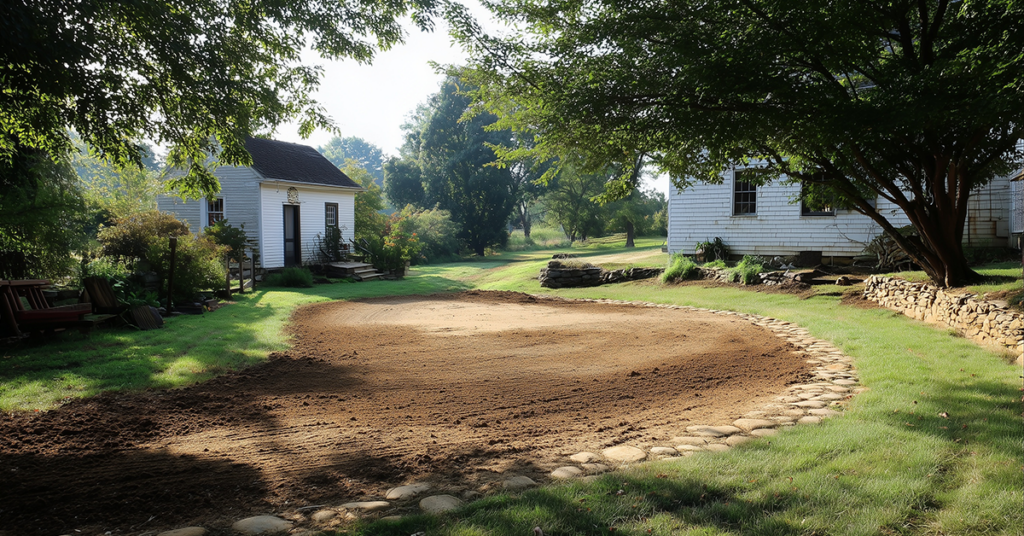
The short answer: if water runs toward your home instead of away from it, your yard was most likely graded incorrectly when the house was built, or it has settled over the years. Regrading reshapes the soil around your foundation so water flows away from the house, protecting your basement, foundation, and landscaping.
Long Hill Contracting has been regrading lots for homeowners across Hillsborough, Somerset County, and Hunterdon County, regrading is one of the most overlooked ways to prevent expensive water damage.
What Regrading Actually Means
Grading is the shaping of the soil around your home to control how water moves across your property. Regrading is correcting that slope after the fact. The goal is simple: the ground should fall away from your foundation on every side. The general standard is about 6 inches of drop over the first 10 feet from the house. When that slope is missing, flat, or reversed, rain and snowmelt collect against the foundation instead of draining off. In Central New Jersey, where clay-heavy soil holds water rather than absorbing it, that pooling turns into a real problem fast.
Warning Signs Your Yard Is Draining Toward the House
Watch for these red flags around your property:
- Water pools near the foundation for hours or days after rain
- Your basement or crawl space feels damp or floods during storms
- Soil, mulch, or gravel washes out of the beds along the house
- Erosion channels or ruts form across the yard
- Low spots near the foundation stay soggy long after the rest of the yard dries
- Cracks appear in the foundation walls or basement floor
- Mosquitoes and standing water gather in the same areas every summer
If you recognize two or more of these, water is very likely moving in the wrong direction.
Why So Many NJ Yards Slope the Wrong Way
There are a few common reasons homeowners in Somerset and Hunterdon County end up with bad drainage. On older homes, the soil that was backfilled around the foundation settles over decades and creates a low collar right against the house. On newer construction, heavy equipment compacts the soil and builders do not always establish a proper final grade. Freeze and thaw cycles through a New Jersey winter shift the soil every year. And additions like patios, driveways, walkways, and pools change the way water flows without anyone planning for it. Any one of these can quietly send water back toward your home.
How Professional Yard Regrading Fixes It
Correcting the grade is more than moving a few wheelbarrows of dirt. Our team evaluates the full slope of your property, identifies where water is collecting, and reshapes the soil to establish positive drainage away from the foundation. Depending on the site, that can include bringing in clean fill and topsoil, cutting a shallow swale to guide water toward a safe outlet, tying the new grade into existing drainage, and restoring the lawn afterward. Because we handle grading and excavation together, we correct the problem at the source instead of masking it.
Why Timing Matters in Central New Jersey
The best window for regrading in New Jersey is late spring through early fall, when the ground is dry and firm enough to shape and settle properly. Getting the work done before the heavy fall rains and the winter freeze and thaw season means your foundation is protected when it matters most. Waiting until water is already in the basement usually means dealing with more damage and a more urgent, more disruptive fix.
Frequently Asked Questions
Small touch-ups to a garden bed are within reach for many homeowners. Correcting the grade around a foundation is a different job. It requires reading the whole property drainage, moving significant soil, and the right equipment to compact and finish it so it does not settle back. That is where a professional makes the difference.
Very often, yes. When surface water is the cause, redirecting it away from the foundation solves the problem. If water is coming from a high water table or a failed interior system, regrading is one part of a larger solution. We assess which one you are dealing with before any work begins.
It depends on the township. Some Somerset and Hunterdon County towns require a grading or soil disturbance permit once you move a certain amount of earth or change drainage near a property line. We handle the local requirements as part of the project.
Most residential regrading projects take one to three days, depending on the size of the yard, the amount of soil involved, and site access. We give you a clear timeline before we start.
Talk to Long Hill Contracting
Long Hill Contracting has shaped and drained properties across Central New Jersey for over 30 years. If water is heading toward your home instead of away from it, call us at (908) 533-4319 to schedule an on-site assessment. We serve Hillsborough, Branchburg, Montgomery, Bridgewater, Somerville, Flemington, and the surrounding Somerset and Hunterdon County communities.
Long Hill Contracting | 601 Rt. 206 Suite 26-408, Hillsborough, NJ 08844 | 151 five-star Google reviews · 30+ years experience · NJ DEP licensed